
Test Short Film
Synopsis
Test Short Film Full Synopsis
Confident Craft
Solid, competent filmmaking. The film knows what it wants to be and largely succeeds. There may be meaningful weaknesses, but the overall work is clear and assured.
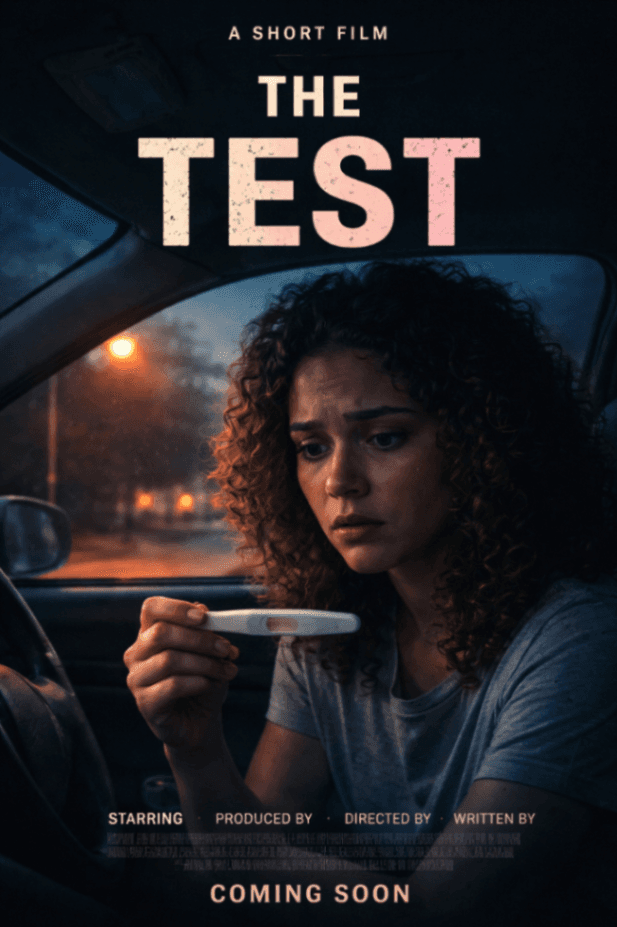
The Test works because it understands how terrifying a quiet moment can be. Not terror in the horror-movie sense, but the kind that arrives in private, sits next to you, and changes the temperature of your life before you have even decided what to call it. This feels like a film built on that exact sensation: the split second where thought becomes consequence.
What I like most about the direction is its control. The film seems to know that this story does not need grand gestures or overworked drama. It needs containment. The staging appears intimate and claustrophobic in the best way, keeping the viewer pinned inside the character’s emotional space rather than cutting away to dilute the tension. The pacing matters here too. A film like this lives or dies on whether it knows when to hold a moment and when to move, and The Test feels as though it trusts stillness. That restraint is what gives it force. It does not seem desperate to explain itself. It just lets the moment sit there and become unbearable.
The writing also seems to understand its own scale. The premise is simple, but simplicity is not the same as thinness. In fact, short films often work best when they revolve around one event that opens up a much larger emotional world, and The Test appears to do exactly that. Even the title does a lot of work. It refers to the object, obviously, but it also suggests something deeper: a test of maturity, of relationship, of identity, maybe even of survival. That layered meaning gives the film weight. The writing feels strongest if it resists turning every feeling into dialogue. In stories like this, people do not suddenly become eloquent because their life is changing. They stumble, avoid, deflect, go silent. If the dialogue follows that truth, then the film is smarter for it.
The performances are what would make or break material like this, and it seems the lead carries the burden well. What stands out is not showiness, but presence. The emotion feels internal rather than performed at the audience. That specificity matters. A role like this requires someone who can register thought in real time, someone who can make you feel fear, calculation, disbelief, and grief all at once without announcing any of it. If the full film sustains what the central image suggests, then the performance is doing exactly what it should: making the moment feel lived, not manufactured.
Technically, the craft looks strong. The cinematography seems to lean into low light, enclosed space, and natural atmosphere to create emotional pressure without making it feel artificial. The car becomes more than a location; it becomes a container for panic. Sound would be crucial in a film like this, because silence, breathing, distant traffic, and the smallest background details can do enormous narrative work. Editing, too, would need discipline. Cut too much and you lose the ache of the moment. Cut too little and the film drifts. The Test feels like it knows that tension is often just rhythm.
What stays with me is the intimacy of it. The Test seems interested in that awful human instant when the world does not explode outward, but collapses inward. That is harder to pull off than spectacle. Anyone can stage a dramatic scene. Not everyone can make you feel the weight of one thought sitting in someone’s hand. That is what lingers here. Not just what happened, but the silence around it.
Published March 2026
Reviewed by
Skarma